

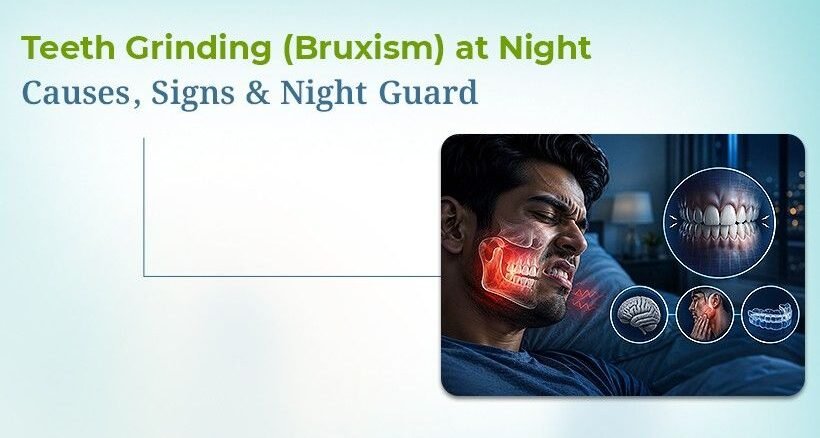
If you’re waking up with a sore jaw, a dull headache, or teeth that feel oddly sensitive, and your partner keeps mentioning a grinding sound at night, you may be dealing with bruxism. At Sweet Tooth Dental Care, a trusted dental clinic in Naranpura, Ahmedabad, we see this condition often, and the good news is it’s very manageable once identified early.
What Is Bruxism, exactly?
Bruxism is the medical term for grinding, gnashing, or clenching your teeth, usually without realizing it. It happens in two forms: awake bruxism, driven by stress or concentration (think clenching your jaw during a tense work call), and sleep bruxism, which happens unconsciously at night and tends to be harder to catch on your own.
Occasional grinding isn’t usually a concern. The problem starts when it becomes frequent enough to wear down enamel, strain your jaw joint, or crack a filling or crown.
What Causes Teeth Grinding?
There’s rarely a single cause. The most common contributors include:
- Stress and anxiety, by far the most frequent trigger, especially with high-pressure jobs or exam-related stress
- An uneven bite, where the upper and lower teeth don’t align properly
- Sleep disorders, including sleep apnea, which is often linked to nighttime grinding
- Lifestyle factors, high caffeine intake, alcohol use, or smoking
- Missing or crooked teeth, which can shift how the jaw comes together
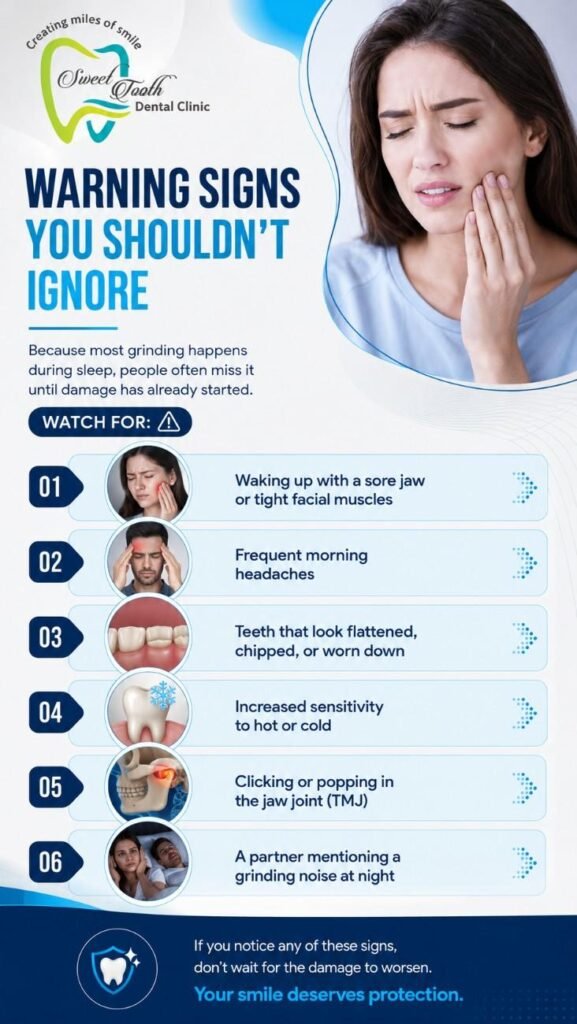
Warning Signs You Shouldn’t Ignore
Because most grinding happens during sleep, people often miss it until damage has already started. Watch for:
- Waking up with a sore jaw or tight facial muscles
- Frequent morning headaches
- Teeth that look flattened, chipped, or worn down
- Increased sensitivity to hot or cold
- Clicking or popping in the jaw joint (TMJ)
- A partner mentioning a grinding noise at night
If two or more of this sound familiar, it’s worth getting checked rather than waiting for a cracked tooth to force the issue.
Why Untreated Bruxism Gets Expensive
Left unchecked, grinding doesn’t just wear down enamel, it can crack existing fillings and crowns, loosen teeth over time, and worsen jaw joint problems. What starts as a low-cost night guard can, if ignored, turn into root canals or crown replacements down the line. Catching it early is almost always the cheaper and simpler path.
How We Treat Bruxism
Treatment usually starts with a clinical exam to check for flattened tooth surfaces, jaw tenderness, or bite misalignment. From there, the most common and effective solution is a custom-fitted night guard, a thin, comfortable appliance worn while sleeping that creates a barrier between your upper and lower teeth, absorbing the grinding force before it reaches your enamel.
Unlike over-the-counter guards from a pharmacy, a custom-made guard is folded to your exact bite, so it fits properly and doesn’t shift out of place overnight. For patients where stress is the main driver, we may also suggest simple jaw-relaxation habits alongside the guard. Dr. Charmi Patanvadiya evaluates each case individually since the right approach depends on what’s causing the grinding.
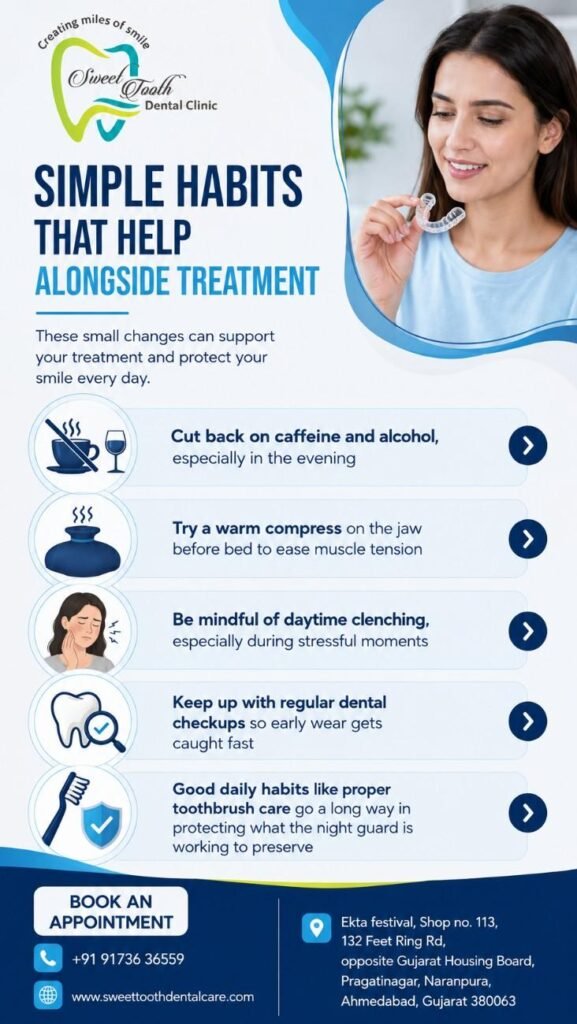
Simple Habits That Help Alongside Treatment
- Cut back on caffeine and alcohol, especially in the evening
- Try a warm compress on the jaw before bed to ease muscle tension
- Be mindful of daytime clenching, especially during stressful moments
- Keep up with regular dental checkups so early wear gets caught fast, good daily habits like proper toothbrush care go a long way in protecting what the night guard is working to preserve
Ready to Get It Checked?
If you’re noticing jaw pain, headaches, or visible wear on your teeth, don’t wait for it to get worse. Get in touch with us for an evaluation, most patients are surprised at how simple the fix turns out to be.
Conclusion
Teeth grinding is easy to dismiss until it starts causing real damage, a cracked filling, a sore jaw every morning, or teeth that just don’t feel right anymore. The earlier it’s caught, the simpler the fix. If any of the signs above sound familiar, reach out on WhatsApp and we’ll help you figure out the right next step.
Book Your Consultation with Dr. Charmi Patanvadiya Today.!
Meet Dr. Charmi Patanvadiya at Sweet Tooth Dental Care, a trusted dental clinic in Ahmedabad. An experienced female dentist in Ahmedabad providing personalized, modern dental care for confident smiles.
Frequently Asked Questions
Q: Are teeth grinding dangerous?
Occasional grinding usually isn’t a concern. But frequent or severe grinding can wear down enamel, crack teeth or restorations, and lead to jaw joint (TMJ) problems over time.
Q: How do I know if I grind my teeth at night since I’m asleep?
Common clues include a partner noticing the sound, waking up with jaw soreness or headaches, or a dentist spotting flattened or worn tooth surfaces during a routine checkup.
Q: Do night guards work?
Yes. A properly fitted, custom night guard is one of the most effective non-invasive ways to protect teeth from grinding damage and ease jaw strain.
Q: Can stress alone cause bruxism?
Stress is one of the most common triggers, but bite alignment, sleep disorders, and lifestyle habits can also play a role, which is why a proper evaluation matters.
Q: Is a custom night guard better than one from a pharmacy?
Generally, yes, a custom guard is folded to your exact bite, so it fits securely and protects more effectively than a generic one-size-fits-all version.
This article is for informational purposes only and is not a substitute for professional dental advice. Please consult Dr. Charmi Patanvadiya or a qualified dentist for personalized care.