

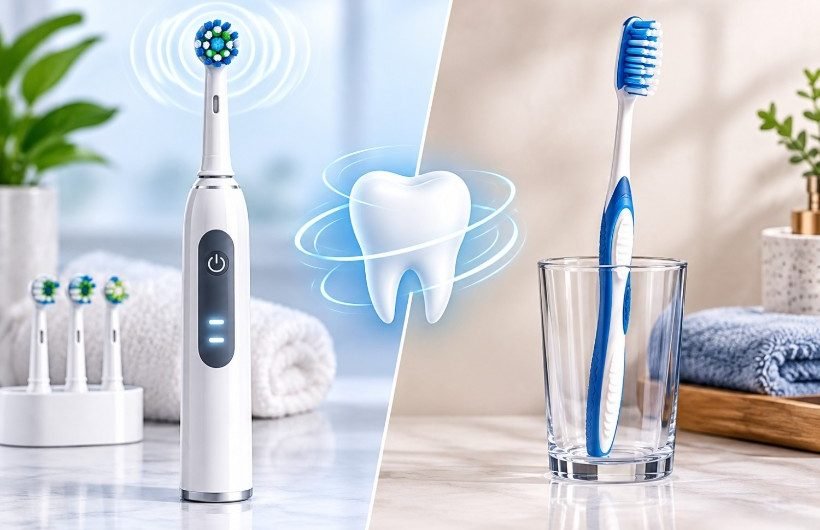
Standing in the toothbrush aisle wondering whether to spend more on an electric brush or stick with a regular one is a question almost every patient asks us at some point. The electric toothbrush vs manual toothbrush debate isn’t about one being “correct” and the other “wrong.” Both can clean your teeth well. What matters is which one actually gets used properly, twice a day, every day. As a dental clinic in Naranpura Ahmedabad, we get this question often enough that it’s worth a clear, honest comparison.
How Do Electric and Manual Toothbrushes Actually Compare?
A manual toothbrush relies entirely on your hand movement to sweep away plaque. An electric toothbrush uses rotating, oscillating, or sonic vibration to do a large part of that work for you, so even an imperfect brushing technique still gets decent results.
Research comparing the two has generally found that electric toothbrushes remove more plaque and reduce gingivitis more effectively than manual ones over time. That doesn’t mean a manual toothbrush is a poor choice. It means the electric brush has a built-in advantage for people who don’t brush with ideal technique or for the full two minutes.
Electric Toothbrush: Benefits and Drawbacks
Benefits:
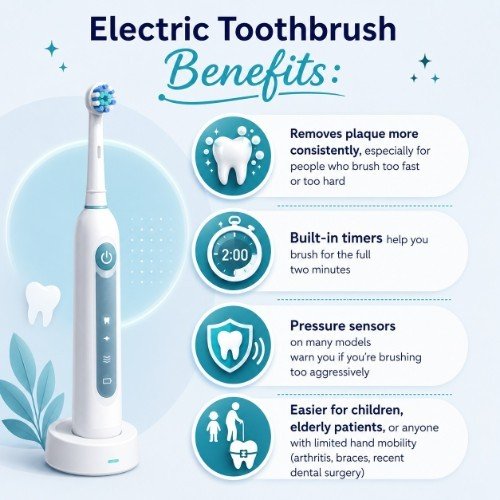
- Removes plaque more consistently, especially for people who brush too fast or too hard
- Built-in timers help you brush for the full two minutes
- Pressure sensors on many models warn you if you’re brushing too aggressively
- Easier for children, elderly patients, or anyone with limited hand mobility (arthritis, braces, recent dental surgery)
Drawbacks:
- Higher upfront cost, plus recurring cost of replacement heads
- Needs charging or batteries, less convenient while travelling
- Some people find the vibration uncomfortable at first
- Not eco-friendly compared to a manual brush
Manual Toothbrush: Benefits and Drawbacks
Benefits:
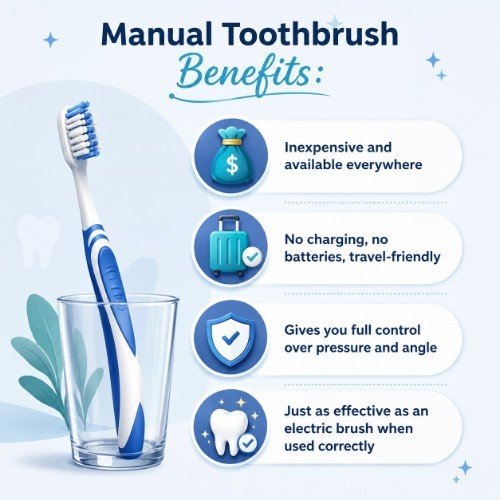
- Inexpensive and available everywhere
- No charging, no batteries, travel-friendly
- Gives you full control over pressure and angle
- Just as effective as an electric brush when used correctly
Drawbacks:
- Effectiveness depends heavily on technique and consistency
- Easy to brush too hard without realising it, which can wear down enamel or irritate gums
- No built-in timer, so two-minute brushing is easy to cut short
Which One Should You Choose?
The honest answer is that the best toothbrush is the one you’ll actually use correctly, twice a day. That said, a few situations tip the decision one way:
- Choose electric if: you tend to rush through brushing, have braces or an implant that needs extra care, or have limited hand mobility
- Choose manual if: you already brush consistently for two minutes with a gentle, soft-bristle technique, or you travel frequently and want something simple
- Either way: pick a soft-bristle brush, since hard bristles can wear down enamel and irritate the gumline regardless of manual or electric
Whichever you use, the brush itself is only half the equation. If you want a simple daily framework to pair with it, our post on the 3-3-3 rule for brushing is worth a look.
How Often Should You Replace It?
This applies to both types. A manual toothbrush should be replaced every 3 to 4 months, or sooner if the bristles fray. Electric toothbrush heads follow the same rule, even though the handle itself lasts years. We cover this in more detail in why you must replace your toothbrush regularly.
Not Sure Which Brush Fits Your Mouth?
Every mouth is a little different, especially if you have braces, sensitive gums, or dental work in progress. Contact us and we can point you toward what actually suits your situation.
Book Your Consultation with Dr. Charmi Patanvadiya Today.!
Meet Dr. Charmi Patanvadiya at Sweet Tooth Dental Care, a trusted dental clinic in Ahmedabad. An experienced female dentist in Ahmedabad providing personalized, modern dental care for confident smiles.
Frequently Asked Questions
Q: Is an electric toothbrush really better than a manual one?
A: Electric toothbrushes generally remove more plaque and reduce gingivitis more than manual ones, but a manual toothbrush used correctly and consistently still cleans effectively.
Q: Can an electric toothbrush damage your gums?
A: Not if used correctly. Most modern electric brushes have pressure sensors that alert you if you’re pressing too hard, which actually makes them gentler on gums than an aggressive manual technique.
Q: Are electric toothbrushes safe for kids?
A: Yes, many electric toothbrushes are designed specifically for children and can make brushing easier and more thorough, especially with a built-in two-minute timer.
Q: Do I need to floss if I use an electric toothbrush?
A: Yes. No toothbrush, electric or manual, reaches between teeth the way floss does. Both routines are still needed.
Q: How much does a good electric toothbrush cost compared to a manual one?
A: A manual toothbrush usually costs a fraction of an electric one upfront, but electric brush heads need replacing regularly too, so the cost gap narrows over time.
Conclusion
The electric toothbrush vs manual toothbrush choice isn’t about finding a single winner, it’s about matching the brush to your habits, mouth, and budget. An electric toothbrush gives a slight edge in plaque removal and is especially helpful for kids, older adults, or anyone prone to rushing through brushing. A manual toothbrush, used correctly, holds up just as well. Dr. Charmi Patanvadiya and the team at Sweet Tooth Dental Care can take a look at your specific needs at your next visit and recommend what actually fits. Chat with us on WhatsApp to book a checkup.
This article is for informational purposes only and does not constitute dental or medical advice. Please consult Dr. Charmi Patanvadiya or a qualified dental professional for personalised guidance.