

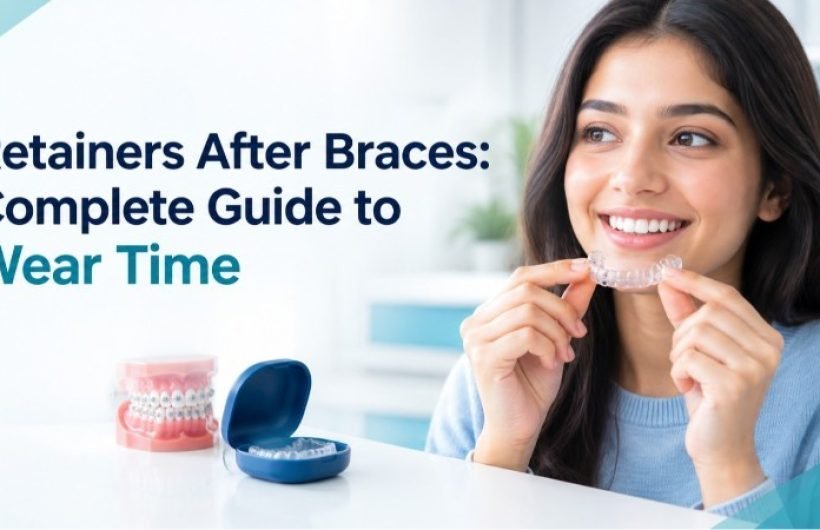
Your braces just came off, your teeth finally look the way you wanted, and the last thing you want to hear is that you’re not quite done yet. But retainers after braces aren’t optional extras, they’re the step that actually protects the results you just paid months or years for. Skip them, and teeth can start drifting back within weeks. As a dental clinic in Naranpura Ahmedabad, we see this question at almost every debonding appointment, so here’s the straight answer on why retainers matter and how long you’ll actually need to wear one.
Why Do You Need Retainers After Braces?
Braces move teeth by applying steady pressure over time, but the bone and ligaments holding your teeth in place take much longer to fully adapt to the new position. Right after braces come off, your teeth are still held in a kind of “memory” of where they used to be, and without something holding them in the new position, they’ll naturally start shifting back.
This process, called relapse, can begin surprisingly fast. Even a few weeks without a retainer can allow noticeable movement, especially in the front teeth. This is exactly why retainers after braces aren’t a suggestion, they’re part of the treatment itself, not an afterthought once the “real” work is done.
Fixed vs Removable Retainers: What’s the Difference?
There are two main types, and most patients end up using one or a combination of both.
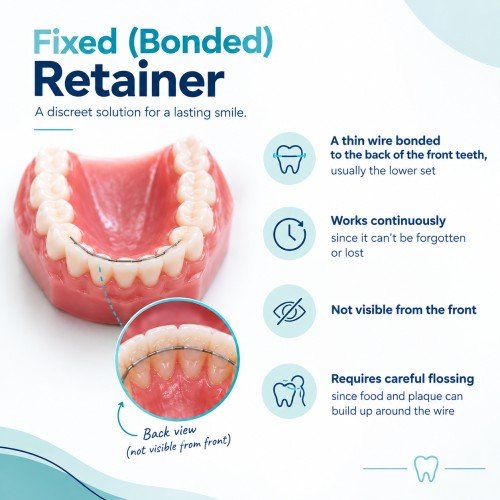
Fixed (bonded) retainer:
- A thin wire bonded to the back of the front teeth, usually the lower set
- Works continuously since it can’t be forgotten or lost
- Not visible from the front
- Requires careful flossing since food and plaque can build up around the wire
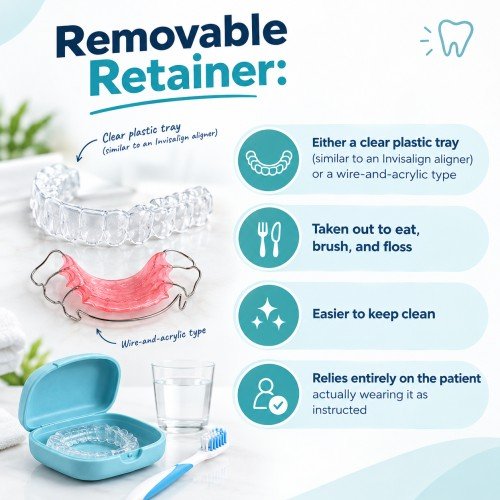
Removable retainer:
- Either a clear plastic tray (similar to an Invisalign aligner) or a wire-and-acrylic type
- Taken out to eat, brush, and floss
- Easier to keep clean
- Relies entirely on the patient actually wearing it as instructed
Many patients get a fixed retainer on the lower front teeth and a removable one for the upper arch, giving round-the-clock protection where relapse tends to happen fastest, with flexibility elsewhere.
How Long Do You Actually Need to Wear a Retainer?
This is the part patients are most surprised by: there’s no real end date. The commonly recommended timeline looks like this:
- First 3 to 6 months: Full-time wear, removed only for eating, brushing, and flossing
- Next 6 to 12 months: Nighttime wear only, as your bone and ligaments continue stabilizing
- After the first year: Most dentists recommend nighttime wear indefinitely, a few nights a week at minimum, since teeth can shift at any age
Fixed retainers, by contrast, are often left in place for several years or longer, since they don’t rely on patient compliance. If you want a refresher on how the original tooth movement worked, our guide on Invisalign vs braces covers how each method shifts teeth in the first place.
What Happens If You Stop Wearing Your Retainer?
Skipping retainer wear, even for a short stretch, is the most common reason people see their teeth shift back after braces. Signs it’s already happening include:
- The retainer suddenly feels tight or doesn’t seat properly
- Small gaps reappearing between front teeth
- A slight rotation or crowding you hadn’t noticed before
If your retainer stops fitting, don’t force it. Get it checked before continuing to wear it, since forcing a retainer onto shifted teeth can cause discomfort or even push them further out of alignment.
Retainer Not Fitting Right?
If your retainer feels off or you’ve gone a while without wearing it, don’t just push through it. Contact us and we’ll take a look before it becomes a bigger fix than it needs to be.
Caring for Your Retainer
- Clean removable retainers daily with a soft brush and lukewarm water, never hot water, which can warp the plastic
- Store it in its case when not in use, not in a tissue or pocket where it can get lost or damaged
- Floss carefully around a fixed retainer wire every day to prevent plaque buildup
- Bring your retainer to regular checkups so your dentist can confirm it’s still fitting properly
For general orthodontic background on how these movements are planned in the first place, our post on what orthodontics treatment involves is a useful companion read.
Conclusion
Retainers after braces are what actually lock in the results of your treatment, not a formality to breeze past. Wear time tapers down over the first year, but some form of retention, especially at night, is usually needed for life to keep teeth from drifting. Dr. Charmi Patanvadiya and the team at Sweet Tooth Dental Care can check your retainer fit and answer any questions at your next visit. Chat with us on WhatsApp if your retainer feels off or it’s been a while since your last check.
Book Your Consultation with Dr. Charmi Patanvadiya Today.!
Meet Dr. Charmi Patanvadiya at Sweet Tooth Dental Care, a trusted dental clinic in Ahmedabad. An experienced female dentist in Ahmedabad providing personalized, modern dental care for confident smiles.
Frequently Asked Questions
Q: Do I really need to wear a retainer forever?
A: For long-term stability, yes, at least a few nights a week indefinitely. Teeth can shift at any age, not just right after braces come off.
Q: Can I switch from a removable retainer to just relying on a fixed one?
A: Sometimes, but this depends on your specific case. Ask your dentist before making that switch on your own.
Q: What if I lost my retainer and it’s been a few weeks?
A: Get in touch as soon as possible. The longer you go without one, the more likely some shifting has already started, and your dentist can assess whether it’s still minor.
Q: Are fixed retainers uncomfortable?
A: Most patients adjust within a few days. The wire is thin and sits behind the teeth, so it’s rarely noticeable once you’re used to it.
Q: Can a retainer fix new crowding on its own?
A: No. A retainer holds teeth in position, it doesn’t move them. New crowding usually needs a fresh evaluation and possibly a short round of treatment.
This article is for informational purposes only and does not constitute dental or medical advice. Please consult Dr. Charmi Patanvadiya or a qualified dental professional for personalised guidance.