

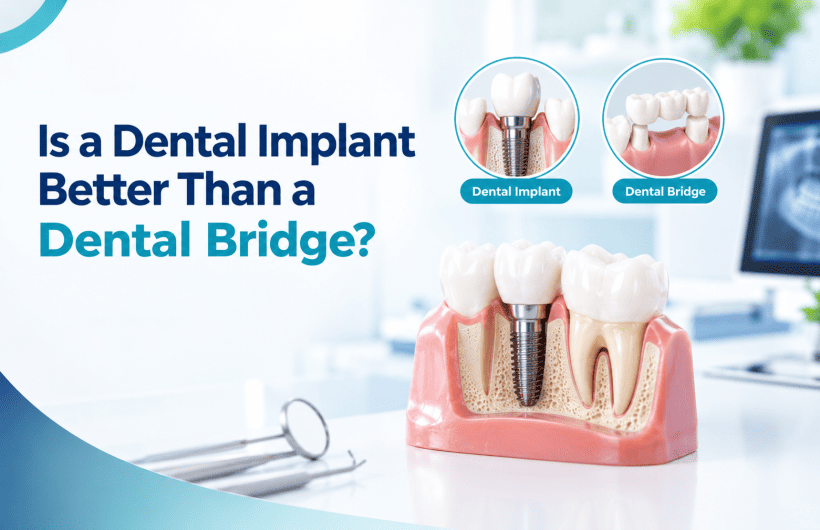
Losing a tooth can affect your smile, chewing, and confidence. If you have a missing tooth, your dentist may suggest a dental implant or a dental bridge. Both treatments can replace missing teeth, but they work differently and have their own benefits.
At Dental clinic in Ahmedabad, patients can discuss suitable tooth replacement options based on their oral health, budget, and treatment needs.
So, is a dental implant better than a dental bridge? In many cases, a dental implant can be a good long-term option because it replaces the missing tooth root and usually does not require support from neighbouring teeth. However, a dental bridge may be more suitable for some patients who want a quicker treatment or already have damaged teeth next to the gap.
The best choice depends on your gums, jawbone, nearby teeth, and overall health. Let us understand the differences before you decide.
What Is a Dental Implant?
A dental implant is a small post, usually made from titanium, that is placed inside the jawbone to replace the root of a missing tooth. After the implant heals, a dental crown is attached to it to replace the visible part of the tooth.
A dental implant is designed to look and function like a natural tooth. It can help you chew comfortably and restore the appearance of your smile.
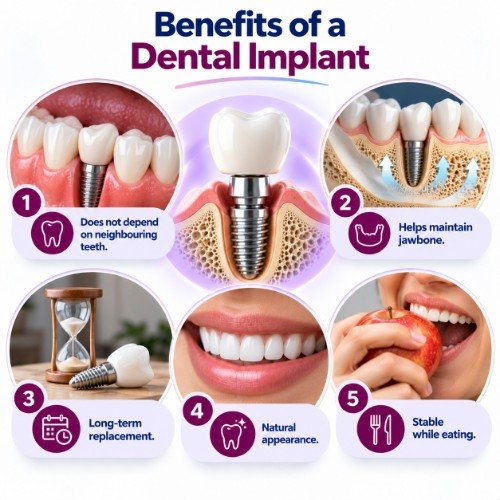
Benefits of a Dental Implant
- Does not depend on neighbouring teeth: A single implant usually does not require healthy nearby teeth to be cut down for support.
- Helps maintain jawbone: The implant transfers chewing forces to the jawbone, helping reduce bone loss in the treated area.
- Long-term replacement: An implant can last many years with proper care, although the crown may need repair or replacement.
- Natural appearance: The crown can be designed to match the colour and shape of your other teeth.
- Stable while eating: Once healing is complete, a well-placed implant can provide good chewing support.
However, dental implant treatment usually involves surgery and a healing period. You also need suitable jawbone and healthy gums. Some patients may require additional treatment before an implant can be placed.
For more information about the procedure, visit our dental implants treatment page.
What Is a Dental Bridge?
A dental bridge is a fixed replacement used to fill the gap left by one or more missing teeth. In a traditional dental bridge, an artificial tooth is supported by crowns placed on the teeth next to the gap.
The dentist prepares the supporting teeth and fits the bridge over them. Unlike a removable denture, a fixed bridge stays in place during normal eating and speaking.
Benefits of a Dental Bridge
- Quicker treatment: Many traditional bridges can be completed within a few weeks.
- No implant surgery: A conventional bridge does not require a post to be placed inside the jawbone.
- Lower initial cost: A dental bridge often costs less at the beginning than a dental implant.
- Useful for damaged neighbouring teeth: It may be suitable when the supporting teeth already need crowns.
- Restores chewing and appearance: A properly fitted bridge can help improve everyday function and the appearance of your smile.
The main limitation is that a traditional bridge usually requires changes to the supporting teeth. It also does not replace the missing tooth root, so bone loss beneath the gap may continue.
You can learn more about the procedure on our dental bridge treatment page.
Dental Implant vs Dental Bridge: What Is the Difference?
Both treatments replace missing teeth, but they differ in how they are placed, how long treatment takes, and how they affect nearby teeth.
| Feature | Dental Implant | Dental Bridge |
|---|---|---|
| Support | Placed in the jawbone | Usually supported by neighbouring teeth |
| Surgery | Usually required | Not required for a traditional bridge |
| Treatment Time | Often several months | Often a few weeks |
| Initial Cost | Usually higher | Usually lower |
| Nearby Teeth | Healthy teeth usually remain untouched | Supporting teeth may need preparation |
| Jawbone | Helps maintain bone in the treated area | Does not replace the missing tooth root |
| Cleaning | Needs careful cleaning around the implant | Needs cleaning beneath the artificial tooth |
| Lifespan | Can last many years with proper care | May need replacement after several years |
Treatment time and lifespan vary from person to person. Your dentist can explain what to expect after examining your teeth and gums.
Is a Dental Implant Better Than a Dental Bridge for Long-Term Results?
A dental implant may be the better long-term option when your gums and jawbone are healthy enough for treatment. It replaces the missing tooth root and does not depend on neighbouring teeth for support.
A traditional bridge can also work well for many years. However, its lifespan depends on the health of the supporting teeth, the fit of the bridge, your bite, and daily cleaning.
When comparing long-term results, consider these points:
- An implant can help reduce bone loss in the area where the tooth is missing.
- A traditional bridge may place additional pressure on the supporting teeth.
- Both treatments need regular dental check-ups and proper cleaning.
- The crown on an implant and the artificial tooth in a bridge may need repair or replacement over time.
So, is a dental implant better than a dental bridge in every case? No. An implant may offer advantages for a suitable patient, but a bridge may be more practical when the nearby teeth already need crowns or when surgery is not suitable.
Which Is More Affordable: A Dental Implant or a Dental Bridge?
A dental bridge usually has a lower initial cost than a dental implant. This can make it a practical choice for patients who want to replace a missing tooth without implant surgery.
An implant generally costs more because it involves surgical placement, healing, and a custom-made crown. Some patients may also need additional procedures, such as bone grafting.
The final cost depends on:
- The number of missing teeth.
- The type and material of the crown or bridge.
- The condition of your gums and jawbone.
- Whether additional treatment is needed.
- The complexity of your dental condition.
There is no single price that applies to every patient. Ask your dentist for a treatment plan that explains the complete cost of both options, including follow-up visits and possible future maintenance.
When deciding whether a dental implant is better than a dental bridge, compare the expected long-term care as well as the initial treatment cost.
Which Treatment Takes Less Time?
A dental bridge is usually faster to complete. In many cases, the dentist prepares the supporting teeth, takes impressions or digital scans, and fits the final bridge within a few weeks.
Dental implant treatment often takes several months because the jawbone needs time to heal and bond with the implant. The exact time depends on your bone condition, gum health, and whether additional treatment is needed.
Some patients may qualify for a faster implant treatment plan, but this depends on a proper clinical assessment.
If you need to replace a missing tooth quickly, discuss the expected treatment time for both options with your dentist before planning.
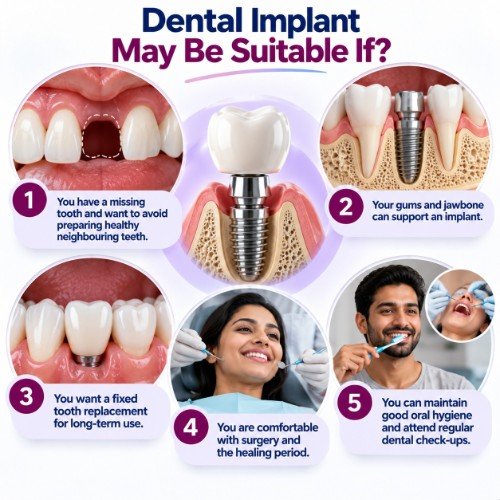
When Should You Choose a Dental Implant?
A dental implant may be suitable if:
- You have a missing tooth and want to avoid preparing healthy neighbouring teeth.
- Your gums and jawbone can support an implant.
- You want a fixed tooth replacement for long-term use.
- You are comfortable with surgery and the healing period.
- You can maintain good oral hygiene and attend regular dental check-ups.
Some health conditions, smoking, active gum disease, and certain medicines can affect healing or implant success. These factors do not automatically rule out treatment, but your dentist needs to assess them.
For a suitable patient, an implant can provide a stable replacement while preserving the structure of neighbouring natural teeth.
When Is a Dental Bridge a Better Option?
A dental bridge may be suitable if:
- You want a fixed tooth replacement without implant surgery.
- You need a quicker treatment.
- The teeth next to the gap already have large fillings or need crowns.
- Your jawbone condition makes implant treatment difficult.
- The initial cost of an implant is beyond your budget.
A bridge is not automatically the right choice for every patient who cannot have an implant. Depending on the number of missing teeth and your oral health, your dentist may discuss other treatment options.
The answer to whether a dental implant is better than a dental bridge depends on your individual dental condition, rather than one treatment being best for everyone.
How Can You Choose the Right Treatment?
The best way to decide is to have your mouth examined by a qualified dentist. Your dentist will check the missing tooth area, nearby teeth, gums, bite, and available jawbone.
Dental X-rays and, in selected cases, a 3D scan may be needed to plan implant treatment.
Dr. Charmi Patanvadiya can assess your dental condition and explain the available treatment options. You can learn more about dentist in Ahmedabad, before planning a consultation.
Do not choose a treatment based only on price or another person’s experience. The right option should suit your oral health, daily needs, and long-term expectations.
How Can You Care for a Dental Implant or Bridge?
Both treatments need regular cleaning and dental check-ups to stay in good condition.
For a dental implant, brush twice daily and clean carefully around the implant and gums. For a dental bridge, clean beneath the artificial tooth using a suitable floss threader or interdental cleaner, as advised by your dentist.
Good oral hygiene helps reduce the risk of gum disease and other dental problems. Follow these oral hygiene tips for healthy teeth and gums to support your daily dental care routine.
Conclusion
So, is a dental implant better than a dental bridge? A dental implant may offer advantages for long-term tooth replacement, but a dental bridge can also be the right choice for many patients. The decision depends on your oral health, budget, treatment time, and the condition of your neighbouring teeth.
If you have a missing tooth, seek professional advice before choosing a treatment. The right plan can help restore your smile, improve chewing, and support your oral health for years to come. Contact Sweet Tooth Dental Care on WhatsApp to discuss your treatment options and arrange a consultation.
Book Your Consultation with Dr. Charmi Patanvadiya Today.!
Meet Dr. Charmi Patanvadiya at Sweet Tooth Dental Care, a trusted dental clinic in Ahmedabad.
Frequently Asked Questions
Is a dental implant better than a dental bridge?
A dental implant may offer advantages for long-term tooth replacement because it usually does not require changes to healthy neighbouring teeth. A bridge may suit patients who need quicker treatment or a lower initial cost.
Which lasts longer, a dental implant or a dental bridge?
Both can last many years. An implant may last for decades with proper care, while a bridge may need replacement sooner. Results vary between patients.
Is a dental bridge cheaper than an implant?
A dental bridge usually costs less initially. An implant often costs more because it requires surgery and healing.
Is getting a dental implant painful?
The procedure is usually performed under local anaesthesia. Some soreness or swelling may occur after surgery, and your dentist can advise you on managing it.
Can everyone get a dental implant?
No. Your gums, jawbone, general health, and oral hygiene affect whether an implant is suitable. A dental examination is necessary before treatment.
Medical Disclaimer: This article is for general educational purposes only and does not replace a dental examination or personalised medical advice. A qualified dentist should assess your condition before recommending a dental implant or bridge.