

Oral surgery is a dental procedure used to treat problems affecting the teeth, gums, jawbone and other parts of the mouth. It may be needed to remove a damaged tooth, treat an impacted wisdom tooth, replace missing teeth with dental implants or correct certain gum and jaw problems. The type of surgery depends on your dental condition, overall health and treatment needs. Understanding the procedure, its benefits, possible risks and recovery can help you feel more prepared for dental treatment.
What Is Oral Surgery?
Oral surgery specialist refers to surgical procedures performed on the teeth, gums, jawbone and other tissues inside the mouth. A dentist in Ahmedabad or a suitably trained oral surgeon may recommend it when a dental problem cannot be treated effectively with routine dental care alone.
For example, a severely damaged tooth may need to be removed, while an impacted wisdom tooth may require surgical extraction. Some patients may need oral surgery to prepare the jawbone for dental implants or to treat certain gum conditions.
Not every dental oral problem requires surgery. Your dentist will examine your mouth, review your symptoms and recommend the most suitable treatment.
What Are the Different Types of Oral Surgery?
There are several types of oral surgery. The procedure recommended for you will depend on the location and severity of the dental problem.
1. Tooth Extraction
Tooth extraction involves removing a tooth from its socket in the jawbone. A dentist may recommend this procedure if a tooth is severely damaged by decay, has a serious infection, or cannot be saved with other treatments.
In some cases, a simple extraction is enough. However, a tooth that has broken below the gum line or is difficult to access may require surgical extraction.
When appropriate, your dentist may consider a dental filling or another tooth-saving treatment before recommending removal.
2. Wisdom Tooth Removal
Wisdom teeth are the last molars at the back of the mouth. They usually appear during the late teenage years or early adulthood, although the timing varies.
Sometimes, there is not enough space for these teeth to come through properly. They may remain trapped beneath the gums or grow at an angle. This is known as an impacted wisdom tooth.
Your dentist may recommend wisdom tooth removal if it causes problems such as:
- Pain or swelling near the back of the mouth.
- Repeated gum infections around the tooth.
- Tooth decay that is difficult to treat.
- Damage to a neighbouring tooth.
- A cyst or another problem associated with the impacted tooth.
Not every wisdom tooth needs to be removed. Your dentist will assess the tooth, symptoms and dental X-rays before deciding whether surgery is necessary.
3. Dental Implant Surgery
Dental implant surgery is used to replace one or more missing teeth. A dental implant is a small post, usually made of titanium, that is placed in the jawbone to support a replacement tooth.
The implant gradually integrates with the surrounding bone. After the appropriate healing period, a crown or another suitable restoration can be attached.
Dental implants can help restore chewing function and improve the appearance of your smile. However, suitability depends on factors such as jawbone health, gum condition, general health and oral hygiene.
Some patients may require a bone graft before implant placement if they do not have enough bone to support the implant securely.
4. Bone Grafting
Bone grafting is a procedure used to add or rebuild bone in the jaw. It may be recommended when the jawbone does not have enough volume to support a dental implant or when bone has been lost because of injury or disease.
During the procedure, the dentist or surgeon places suitable graft material in the required area. The material supports the development of new bone over time.
Bone grafting can help prepare the jaw for further treatment, but healing may take several months, depending on the extent of the procedure.
5. Gum Surgery
Gum surgery may be recommended to treat certain gum conditions, correct gum recession or improve the support around teeth.
Depending on the problem, treatment may involve removing infected tissue, reshaping gum tissue or placing a gum graft to cover exposed tooth roots.
Your dentist will first assess the condition of your gums and explain whether non-surgical treatment, such as professional cleaning and improved oral hygiene, may be sufficient.
You can also read these practical oral hygiene tips and advice to understand how daily care supports healthy gums.
6. Corrective Jaw Surgery
Corrective jaw surgery, also called orthognathic surgery, is used to correct certain problems with jaw position and alignment.
It may be considered when jaw irregularities cause difficulties with chewing, speaking or biting. Some patients may also need it to address specific structural problems affecting facial balance.
Treatment usually requires careful planning and may involve an orthodontist and an oral and maxillofacial surgeon. Braces or other orthodontic treatment may be needed before or after surgery.
When Is Oral Surgery Necessary?
Your dentist may recommend oral surgery when a problem requires treatment beyond routine dental procedures.
Common reasons include:
- A severely decayed or fractured tooth that cannot be restored.
- An impacted wisdom tooth causing pain, infection or damage.
- Missing teeth that may be suitable for dental implants.
- Certain gum conditions that require surgical treatment.
- Insufficient jawbone for planned implant placement.
- Cysts or other abnormal growths that need assessment or removal.
- Jaw alignment problems that affect oral function.
The right treatment depends on the diagnosis. For example, a tooth with decay may be treated with a filling or root canal treatment rather than extraction if it can be saved.
Regular dental visits can help identify dental problems early, when less invasive treatments may still be possible.
What Are the Benefits of Oral Surgery?
When it is recommended for the right reason, oral surgery can improve oral health, relieve symptoms and restore important dental functions.
Relief From Pain and Infection
A damaged tooth, an impacted wisdom tooth or certain gum problems can cause ongoing pain and inflammation. Appropriate surgery may remove the source of the problem and help the affected area heal.
However, the underlying cause must be correctly diagnosed. Surgery is not necessary for every type of dental pain.
Improved Chewing and Speaking
Missing teeth, damaged teeth and certain jaw problems can make eating or speaking uncomfortable. Procedures such as dental implant placement or corrective jaw surgery may improve these functions when suitable.
Replacement of Missing Teeth
Dental implant surgery can provide support for replacement teeth. This may help patients chew more comfortably and restore the appearance of their smile.
The outcome depends on bone health, the type of restoration and the patient’s long-term oral care.
Protection of Nearby Teeth and Tissues
In selected cases, removing an impacted or problematic tooth can help prevent further damage to neighbouring teeth and surrounding tissues.
However, preventive surgery should be based on a dental assessment rather than performed automatically.
Better Oral Health
Treating certain dental infections, removing non-restorable teeth and managing selected gum conditions can support better oral health. Surgery may also form one part of a broader treatment plan that includes cleaning, restorative treatment and regular dental check-ups.
What Are the Risks and Complications of Oral Surgery?
Oral surgery is commonly performed, but every surgical procedure has potential risks. The likelihood of complications depends on the type of surgery, the patient’s health and the complexity of the treatment.
Possible risks include:
- Pain and swelling: Some discomfort and swelling are common during the initial healing period.
- Bleeding: Mild bleeding or blood-stained saliva may occur after surgery.
- Infection: Bacteria can sometimes cause an infection at the surgical site.
- Dry socket: After a tooth extraction, the protective blood clot may be lost or break down, exposing the underlying bone and causing significant pain.
- Nerve injury: Certain procedures, particularly the removal of lower wisdom teeth, may carry a risk of temporary or, rarely, lasting changes in sensation.
- Delayed healing: Smoking, some medical conditions and other individual factors can interfere with recovery.
- Damage to nearby structures: Depending on the procedure, neighbouring teeth or the sinus area may be affected.
These complications do not occur in every patient. Your dentist will explain the risks that apply to your procedure and discuss how they can be reduced.
Before surgery, inform your dentist about any medical conditions, allergies and medicines you take, including blood-thinning medicines. Do not stop prescribed medication unless your treating clinician advises you to do so.
How Should You Prepare for Oral Surgery?
Preparing for oral surgery helps you understand the treatment and plan for a comfortable recovery.
1. Attend a Dental Examination
Your dentist will examine your teeth, gums and mouth. Dental X-rays or other imaging may be required to understand the position of a tooth, assess the jawbone or plan the procedure.
2. Discuss Your Medical History
Tell your dentist about your medical conditions, previous reactions to anaesthesia, allergies and all medicines or supplements you take. These details may affect treatment planning.
3. Understand the Procedure
Ask your dentist what the procedure involves, which type of anaesthesia will be used, how long it may take and what you should expect afterwards.
If sedation or general anaesthesia is planned, follow the specific instructions about fasting, medicines and arranging transport home.
4. Plan for Recovery
Arrange enough time to rest after surgery. Keep soft foods available and make sure you understand your aftercare instructions, including how to manage pain, maintain oral hygiene and attend follow-up appointments.
What Happens During Oral Surgery?
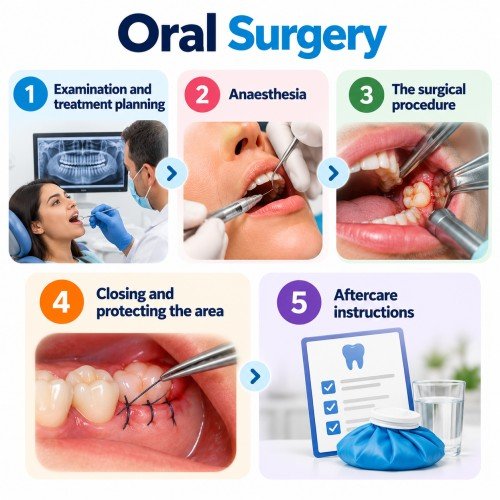
The exact process depends on the procedure, but most oral surgeries follow a similar sequence.
Step 1: Examination and treatment planning
Your dentist reviews the examination findings and imaging, confirms the treatment plan and explains the procedure.
Step 2: Anaesthesia
Local anaesthesia is commonly used to numb the treatment area. Sedation or general anaesthesia may be considered for selected procedures, depending on their complexity and the patient’s needs.
Step 3: The surgical procedure
The dentist or surgeon performs the planned treatment. This may involve removing a tooth, placing an implant, treating gum tissue or working with the jawbone.
Step 4: Closing and protecting the area
Depending on the procedure, stitches may be placed and gauze may be used to control bleeding.
Step 5: Aftercare instructions
Before you leave, your dental team explains how to care for the surgical site, which medicines to take if prescribed and when to return for a review.
Oral Surgery Recovery: What Should You Expect?
Recovery varies according to the type of surgery, the extent of treatment and your general health.
After a minor procedure, you may feel comfortable enough to resume many usual activities within a few days. More complex procedures, such as bone grafting or jaw surgery, may require a longer recovery period.
First 24 Hours
You may experience numbness, mild bleeding, discomfort or the beginning of swelling.
During this period:
- Rest and avoid strenuous physical activity.
- Choose soft, cool or lukewarm foods when it is safe to eat.
- Avoid hot food and drinks while your mouth is numb.
- Do not rinse vigorously, spit forcefully or disturb the surgical site.
- Follow your dentist’s instructions for controlling bleeding and taking medicines.
After an extraction, protecting the blood clot in the tooth socket is especially important because it supports healing.
Days 2 to 3
Swelling and discomfort may increase during the first two or three days before gradually improving. This can be a normal part of healing.
Continue eating suitable soft foods, drink enough fluids and avoid smoking. Brush your teeth gently while protecting the surgical area.
Begin rinsing with warm salt water or using a prescribed mouthwash only according to your dentist’s instructions and the timing advised for your procedure.
Days 4 to 7
Many patients begin to feel more comfortable during this period, although healing times differ.
Gradually return to your usual diet as comfort improves and your dentist permits it. Continue keeping your mouth clean and take any prescribed medicines as directed.
If pain or swelling becomes worse instead of improving, contact your dentist for advice.
After the First Week
The gum tissue may continue healing for several weeks. Bone healing after procedures involving the jawbone can take considerably longer, sometimes several months.
Attend follow-up appointments so your dentist can check healing, assess the surgical site and plan any further treatment.
Foods to Eat and Avoid After Oral Surgery
Your diet can affect comfort during recovery, particularly after tooth extraction or gum surgery.
Foods You Can Usually Eat
Depending on your procedure and your dentist’s advice, suitable options may include:
- Soft rice or khichdi.
- Mashed potatoes.
- Curd or yoghurt.
- Scrambled eggs.
- Soft, well-cooked vegetables.
- Lukewarm soup.
- Soft pasta.
Choose foods that require minimal chewing and avoid anything that irritates the surgical area.
Foods and Habits to Avoid
For the initial healing period, avoid hard, crunchy, sticky or very spicy foods if they cause discomfort. Very hot foods and drinks should also be avoided while your mouth is numb.
Do not smoke or use tobacco during recovery, as these can interfere with healing and increase the risk of complications. Avoid alcohol when advised, particularly if you are taking medicines or have received sedation.
Follow your dentist’s specific dietary instructions because the restrictions after an implant or jaw surgery may differ from those after a simple extraction.
When Should You Contact Your Dentist After Oral Surgery?
Some pain, swelling and mild bleeding may be expected after oral surgery. However, certain symptoms need prompt attention.
Contact your dentist if you experience:
- Pain that becomes severe or worsens after initially improving.
- Increasing swelling, redness or discharge.
- Fever or other signs of infection.
- Persistent bleeding that does not stop with the recommended pressure.
- New or persistent numbness after the expected anaesthetic period.
- Difficulty opening your mouth that is worsening rather than improving.
Seek emergency medical care if you have difficulty breathing or swallowing, or rapidly increasing swelling of the mouth, face or neck.
Do not wait for a routine follow-up appointment if you develop these warning signs.
How Can You Maintain Oral Health After Surgery?
Good oral hygiene helps protect your teeth and gums and supports long-term dental health.
Once your dentist says it is safe, brush twice daily with fluoride toothpaste and clean between your teeth regularly. Avoid brushing directly over a fresh surgical wound until you have been advised how to clean the area safely.
Other helpful habits include:
- Limit frequent sugary snacks and drinks.
- Avoid tobacco and smoking.
- Attend regular dental check-ups.
- Follow the cleaning and maintenance instructions for dental implants, if you have them.
- Seek dental advice early if you notice pain, bleeding gums or swelling.
Professional teeth cleaning and other preventive care may also help you maintain a healthy smile. If you are considering cosmetic dental treatment after your mouth has healed, you can explore the teeth whitening treatment page.
Consult a Dentist About Your Oral Surgery Needs
Oral surgery can help treat selected dental problems, relieve discomfort and restore oral function when other treatments are not suitable. The right procedure depends on your dental condition, medical history and individual treatment goals.
If you have persistent tooth pain, an impacted wisdom tooth, missing teeth or another concern that may require surgery, visit a dental clinic in Ahmedabad to understand your options.
Book Your Consultation with Dr. Charmi Patanvadiya Today.!
Meet Dr. Charmi Patanvadiya at Sweet Tooth Dental Care, a trusted dental clinic in Ahmedabad.
Medical research sources
The medical explanations and aftercare guidance were checked against established patient-education and clinical sources:
-
- Cleveland Clinic, Oral Surgery: Uses, Procedures and Recovery. Cleveland Clinic
- Cleveland Clinic, What to Do After Oral Surgery: Recovery and Self-Care. Cleveland Clinic
- NHS, Information for Patients Who Have Had Surgery in the Mouth. Gloucestershire Hospitals NHS Trust
Medical Disclaimer: This article is intended for general educational purposes and does not replace a dental examination, diagnosis or personalised treatment advice. Oral surgery recommendations and recovery instructions vary from person to person. Consult a qualified dental professional for advice about your specific condition.