

By Dr. Charmi Patanvadiya, BDS | Sweet Tooth Dental Care, Naranpura, Ahmedabad
Laser scaling of teeth is a safe way to remove tartar and calm inflamed gums when a trained dentist uses it, but it is not an automatic upgrade over regular cleaning. For most patients, ultrasonic scaling still does the main work of lifting hard deposits, and the laser is added when the gums need extra attention. If you have been reading about laser scaling of teeth because your gums bleed or your breath never feels fresh, this guide explains what the treatment really does. Patients ask us this every week at Sweet Tooth Dental Care, a Best Dental Clinic in Naranpura Ahmedabad, and the honest answer depends on what your gums look like.
What Is Laser Scaling of Teeth?
Scaling means removing plaque and tartar from your teeth and from just under the gum line. Tartar is the hard yellow-brown deposit that brushing cannot lift once it forms.
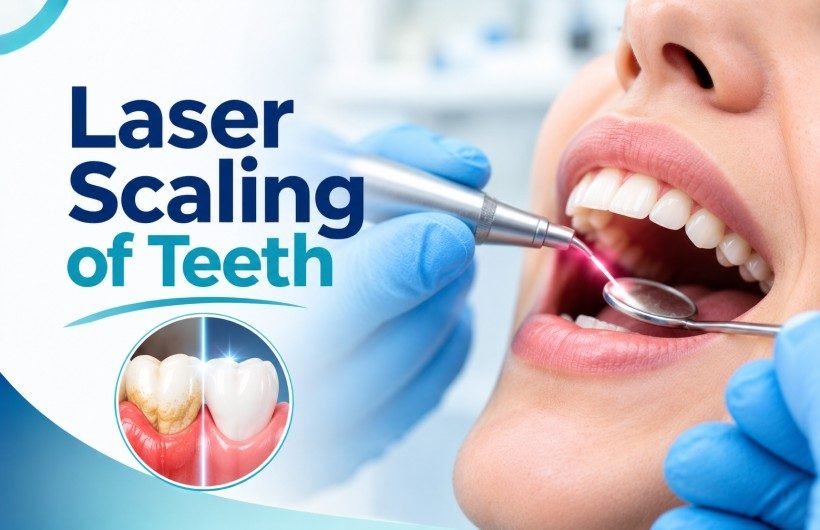
In laser scaling of teeth, a thin laser fibre or handpiece is used along with a standard scaler, and sometimes in place of one. The light energy helps loosen deposits and reduces bacteria inside the gum pocket, the small gap between tooth and gum.
Different lasers do different jobs. Diode lasers work mainly on soft tissue such as gums, so they are not meant to chip hard tartar off the tooth on their own. Erbium lasers can work on hard deposits, and published trials have found them about as effective as an ultrasonic scaler, not clearly better. You can read more about how laser dentistry works across different treatments in our earlier guide.
How Does Laser Scaling Compare With Ultrasonic Cleaning?
Here is how the main options differ in practice:
- Ultrasonic scaling: A vibrating tip with a water spray breaks tartar off the teeth. It is the standard method worldwide and works well for heavy deposits.
- Laser scaling: Best suited to gum problems such as bleeding, swelling and deep pockets. It is usually combined with ultrasonic scaling, and it needs a dentist trained in laser use and eye protection for everyone in the room.
- Hand scaling: A fine manual instrument used to finish smooth surfaces and reach tight spots.
If anyone tells you laser cleaning is always better, ask what the research says. Studies that compared an erbium laser with an ultrasonic scaler found both improved gum health, with no clear winner. A good dentist chooses the method that fits your mouth, not the method that sounds newest.
Who Benefits Most From Laser Scaling of Teeth?
Laser scaling of teeth makes the most sense when your gums are the main problem, not just surface stains. You may be a good candidate if you have:
- Gums that bleed when you brush or floss
- Swollen, red or tender gums
- Early signs of gum disease, such as pockets deeper than normal
- Persistent bad breath that returns soon after cleaning
Some patients also feel more comfortable with the laser than with the vibration and water spray of an ultrasonic tip, though this varies from person to person.
If you only have light tea or coffee stains, regular scaling and polishing is enough. A laser would add cost without adding much benefit.
What Are the Signs You Need Professional Scaling?
Tartar builds up slowly, so many people do not notice it until the gums react. Watch for a rough ridge along the gum line, pink blood in the sink after brushing, a bad taste, or gums that look puffy at the edges. Teeth that seem longer because the gums have pulled back also deserve a check.
At our clinic, Dr. Charmi Patanvadiya examines the gums and measures the pockets before recommending any method. You can read about her training and approach on the Dr. Charmi Patanvadiya page.
What to Expect Before, During and After Laser Scaling of Teeth
Before: We check your gums, measure pocket depth and, if needed, take an X-ray to see the bone around your teeth. We then explain whether a laser will help your case or whether standard scaling is enough.
During: Everyone wears protective eyewear. We clean the teeth with a scaler, then use the laser around the gum margins where it is needed. Most visits take between 30 and 60 minutes, depending on how much tartar is present. A numbing gel can be used if your gums are tender.
After: Mild sensitivity to cold for a day or two is common, and the gums may feel slightly sore. Use a soft brush, floss gently, and avoid very hot or spicy food on the day of treatment. Slight bleeding in the first day is normal, but heavy bleeding or swelling that increases should be checked.
What Are the Risks and Limits You Should Know?
Laser scaling of teeth is safe in trained hands, but it has limits that patients deserve to hear.
- The laser must be used at the correct settings. Too much energy can heat the gum tissue, which is why training matters.
- A laser does not replace deep cleaning for advanced gum disease. Some cases need a longer course of treatment or a gum specialist.
- It does not whiten teeth. Cleaning removes stains on the surface, but it does not change your natural tooth shade.
- Tartar returns if brushing and flossing slip, no matter which method removed it.
Not Sure Whether You Need Laser Scaling of Teeth or a Regular Clean?
You do not have to decide this on your own. A short gum examination tells us which option suits you, and we will say so plainly if a regular clean is enough. You can contact us to book an appointment at the Naranpura clinic.
Conclusion
Laser scaling of teeth can be a useful part of treating bleeding and inflamed gums, as long as it is chosen for the right reasons and done by a trained dentist. If your gums have been bleeding or your breath will not improve, it is worth getting them checked before the problem goes deeper. Dr. Charmi Patanvadiya sees patients for exactly this at Sweet Tooth Dental Care in Naranpura. You can chat with us on WhatsApp to book a gum check.
Book Your Consultation with Dr. Charmi Patanvadiya Today.!
Meet Dr. Charmi Patanvadiya at Sweet Tooth Dental Care, a trusted dental clinic in Ahmedabad.
Frequently Asked Questions
Is laser scaling of teeth painful?
Most patients feel pressure or mild warmth, not sharp pain. If your gums are inflamed, they may be tender, and we can apply numbing gel to keep you comfortable.
Is laser scaling better than ultrasonic scaling?
Not always. Trials comparing the two have found similar gum improvement, so the best choice depends on your gums and how much tartar you have. Many dentists use the laser alongside ultrasonic scaling for gum problems.
Does scaling loosen or damage teeth?
No. Scaling removes the tartar that sits on the tooth and under the gum. Gaps or looseness you notice afterwards were already there, and the tartar was filling the space.
How often should I get my teeth scaled?
Most people do well with a professional clean every six months. If you have gum disease, we may advise visits every three to four months until your gums settle.
Will laser scaling make my teeth whiter?
No. It removes plaque, tartar and surface stains, so teeth look cleaner, but it does not change their natural shade. Whitening is a separate treatment.
How much does laser scaling cost in Ahmedabad?
The cost depends on how much tartar you have and whether you need gum treatment as well. We give you a clear estimate after examining your mouth.
This article is for informational purposes only and does not constitute dental or medical advice. Please consult Dr. Charmi Patanvadiya or a qualified dental professional for personalised guidance.