

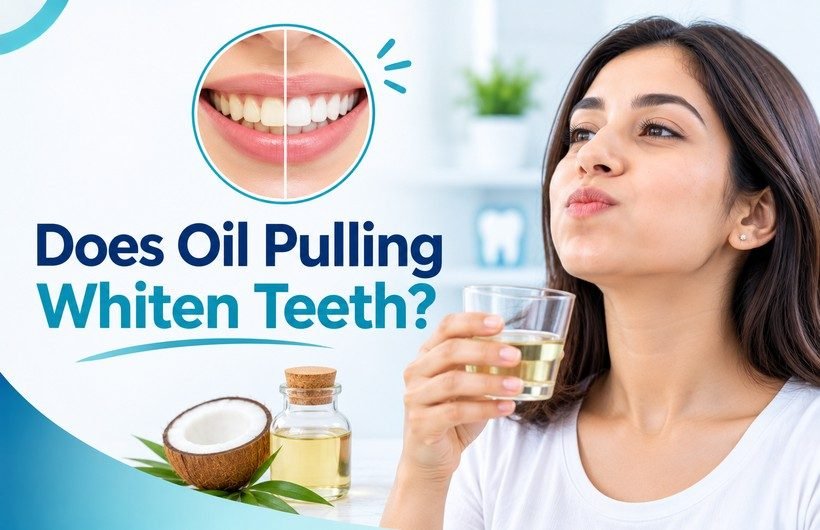
Oil pulling is a traditional oral care practice that involves swishing edible oil, such as coconut or sesame oil, around the mouth for several minutes before spitting it out. Many people use it hoping to whiten teeth, reduce bacteria and improve gum health. However, there is no reliable scientific evidence that oil pulling can whiten teeth. While some studies have explored its possible effects on oral hygiene, it should not replace brushing, flossing or professional dental care.
What Is Oil Pulling?
Oil pulling is an ancient oral hygiene practice traditionally associated with Ayurveda. It involves placing a small amount of edible oil in the mouth and gently swishing it between the teeth before spitting it out.
Coconut oil, sesame oil and sunflower oil are commonly used for this practice. Some people include oil pulling in their morning routine because they believe it helps clean the mouth, freshen breath and maintain healthy gums.
The practice has gained popularity through social media, particularly as a natural method for achieving a brighter smile. However, traditional use does not automatically mean a practice has proven dental benefits.
It is important to understand what oil pulling can and cannot do before adding it to your oral care routine.
Does Oil Pulling Whiten Teeth?
No, oil pulling has not been proven to whiten teeth. Although many people claim that regular coconut oil pulling makes their teeth look brighter, there is currently no reliable scientific evidence showing that this practice changes the natural colour of teeth or removes deep stains.
To understand why, it helps to know how tooth discolouration develops.
Teeth can become yellow or stained because of several factors, including:
- Food and beverages: Tea, coffee, red wine and certain foods can leave stains on the tooth surface.
- Tobacco use: Smoking and chewing tobacco can cause noticeable yellow or brown stains.
- Ageing: As enamel gradually wears down, the naturally yellow dentine underneath can become more visible.
- Poor oral hygiene: Plaque accumulation can make teeth look dull or discoloured.
- Certain medicines and dental conditions: Some medications, developmental conditions and dental injuries can affect tooth colour.
Oil pulling does not contain a clinically established whitening ingredient that can remove these stains or change the internal colour of teeth.
It may leave the mouth feeling different after rinsing, but that should not be confused with actual teeth whitening.
What Does Scientific Research Say About Oil Pulling?
Researchers have studied oil pulling to understand whether it may support oral hygiene. However, the available findings are limited, and more high-quality research is needed.
A systematic review published in 2020 examined the effects of coconut oil pulling on dental hygiene and oral health. It included four randomised controlled trials involving 182 participants.
Some studies reported changes in salivary bacterial levels and plaque scores. However, the researchers found that the evidence was insufficient for firm conclusions because the studies were small, varied in quality and had a risk of bias.
A separate systematic review and meta-analysis published in 2024 also examined oil pulling compared with other mouthwash interventions. It suggested possible improvements in gum health, but the overall quality of evidence was very low. Chlorhexidine mouthwash was more effective at reducing dental plaque.
Are There Any Benefits of Oil Pulling?
Although teeth whitening claims are not supported by reliable evidence, researchers have explored whether oil pulling may have other effects on oral health.
Here are some commonly discussed benefits and their limitations.
1. Possible Effect on Oral Bacteria
Some small studies have reported a reduction in certain bacteria in saliva after oil pulling. However, these findings do not establish that the practice prevents cavities, gum disease or other dental infections.
Regular brushing with fluoride toothpaste remains a more reliable way to protect your teeth.
2. May Help Some People Feel That Their Mouth Is Cleaner
Swishing an edible oil around the mouth may remove some loose food particles and leave a temporary feeling of cleanliness.
However, this feeling does not mean that plaque and harmful deposits have been adequately removed. Toothbrushing and cleaning between the teeth remain essential.
3. Traditional Practice for Oral Hygiene
Oil pulling has been used in traditional Ayurvedic oral care for generations. Some people continue the practice as part of their personal wellness routine.
However, traditional use should be distinguished from proven clinical effectiveness. More research is needed before oil pulling can be recommended as a reliable dental treatment.
How to Do Oil Pulling If You Choose to Try It
Oil pulling is not a necessary part of dental hygiene. However, if you choose to practise it, take care to avoid swallowing the oil or disturbing your normal oral care routine.
A commonly described method involves the following steps:
- Take a small amount of food-grade coconut or sesame oil.
- Place it inside your mouth.
- Gently swish it around your teeth and gums without forcing the movement.
- Spit the oil into a dustbin rather than the sink to avoid drain blockages.
- Rinse your mouth with water.
- Brush your teeth with fluoride toothpaste as usual.
Do not force yourself to continue if your jaw feels tired or uncomfortable. Avoid prolonged or vigorous swishing, and do not swallow the oil.
Most importantly, remember that following these steps does not make oil pulling a proven whitening treatment.
What Are the Risks of Oil Pulling?
Oil pulling with food-grade edible oils is generally unlikely to cause harm when performed carefully. However, it is not completely risk-free.
Some possible concerns include:
- Stomach discomfort: Swallowing the oil may cause nausea or digestive discomfort.
- Jaw discomfort: Prolonged swishing can make the jaw feel tired or uncomfortable.
- Aspiration risk: Accidentally inhaling oil into the lungs can cause a rare but serious condition called lipoid pneumonia.
- Delayed dental treatment: Depending on oil pulling instead of professional care may allow cavities, gum disease or other dental problems to progress.
Children and people who have difficulty swallowing or controlling oral movements should avoid oil pulling because of the risk of accidentally inhaling the oil.
What Are the Best Ways to Whiten Teeth Safely?
If your main goal is to whiten teeth, there are more reliable options than oil pulling. The right approach depends on the type of stains, your enamel condition and your overall oral health.
1. Professional Teeth Whitening
Professional teeth whitening is a treatment performed or supervised by a dental professional.
Dentists commonly use peroxide-based whitening products to lighten the colour of natural teeth. The concentration and application method depend on the treatment selected.
Before recommending whitening, your dentist will check for cavities, gum problems and tooth sensitivity. This helps determine whether whitening is suitable for you.
You can explore the teeth whitening treatment available at Sweet Tooth Dental Care.
2. Whitening Toothpaste
Some whitening toothpastes contain mild polishing ingredients that help remove surface stains caused by food, tea and coffee.
Others contain ingredients designed to help with stain removal through different mechanisms.
However, whitening toothpaste generally does not change the natural internal colour of teeth. Choose a product suitable for your teeth and use it according to the instructions.
3. Professional Dental Cleaning
Plaque and hardened tartar can make teeth look dull or yellow. Professional dental cleaning helps remove these deposits from tooth surfaces and areas that are difficult to clean at home.
Although cleaning is not the same as bleaching, it can improve the appearance of teeth when surface deposits are contributing to discolouration.
4. Maintain Good Oral Hygiene
Daily oral care plays an important role in keeping teeth clean and reducing the accumulation of surface stains.
Follow these simple habits:
- Brush twice daily for two minutes using fluoride toothpaste.
- Clean between your teeth once daily using dental floss or an appropriate interdental cleaner.
- Drink enough water throughout the day.
- Limit frequent consumption of tea, coffee and other staining beverages.
- Avoid smoking and tobacco products.
- Visit your dentist regularly.
Oil Pulling vs Professional Teeth Whitening: What Is the Difference?
Both practices are often discussed when people look for ways to improve their smiles. However, they have different purposes and levels of scientific support.
| Feature | Oil Pulling | Professional Teeth Whitening |
|---|---|---|
| Main purpose | Traditional oral care practice | Lightening natural tooth colour |
| Common materials | Coconut or sesame oil | Dentist-approved peroxide-based products |
| Proven whitening effect | Not established | Supported by clinical evidence |
| Removes deep stains | Not proven | Can lighten suitable intrinsic stains |
| Professional supervision | Not usually involved | Recommended for safe treatment planning |
| Treatment result | No established whitening result | Depends on the type of staining and individual teeth |
If you want a noticeable improvement in tooth colour, professional whitening is a more evidence-based option than oil pulling.
How Can You Prevent Teeth from Becoming Yellow?
Even after whitening treatment, daily habits can influence how your teeth look over time.
Here are some practical ways to maintain a cleaner and brighter smile:
Brush properly: Brush twice daily with fluoride toothpaste and use a soft-bristled toothbrush.
Watch your food and drinks: Tea, coffee and certain other foods can contribute to surface stains. Rinsing your mouth with water after consuming them may help reduce residue.
Avoid tobacco: Smoking and chewing tobacco can cause stubborn tooth stains and increase the risk of oral health problems.
Keep your gums healthy: Brush along the gumline gently and clean between your teeth regularly.
Attend dental check-ups: Regular examinations and professional cleaning help identify plaque, tartar and other dental concerns.
You can also read how to maintain oral hygiene for more practical advice.
When Should You Consult a Dentist About Yellow Teeth?
Yellow teeth are not always a sign of poor oral hygiene. Tooth colour can change naturally with age, and certain stains may be related to food habits, tobacco use, medications or dental conditions.
Consider visiting a dentist if:
- Your teeth have become yellow or discoloured suddenly.
- One tooth has changed colour compared with the others.
- You notice persistent stains that do not improve with regular brushing.
- You experience tooth sensitivity or pain.
- Your gums bleed, swell or become uncomfortable.
- You are considering teeth whitening but are unsure which treatment is suitable.
While dental expert examination can help identify the cause of discolouration and determine whether professional cleaning, whitening or another treatment is appropriate.
Get Professional Advice for a Brighter, Healthier Smile
Oil pulling may be an interesting traditional practice, but it is not a scientifically proven method for whitening teeth. If you want to improve your smile, it is better to understand the reason behind tooth discolouration and choose an appropriate dental treatment in ahmedabad.
At Sweet Tooth Dental Care, patients can explore suitable dental care options based on their oral health needs. If you are concerned about yellow teeth or considering professional whitening, consult a dentist to understand which approach may be suitable for you.
Book Your Consultation with Dr. Charmi Patanvadiya Today.!
Meet Dr. Charmi Patanvadiya at Sweet Tooth Dental Care, a trusted dental clinic in Ahmedabad.
Frequently Asked Questions About Oil Pulling and Teeth Whitening
1. Does coconut oil pulling whiten teeth?
No. Coconut oil pulling has not been scientifically proven to whiten teeth or remove deep stains. It should not be used as a replacement for professional teeth whitening.
2. How long does it take for oil pulling to whiten teeth?
There is no established time because oil pulling has not been proven to whiten teeth. Swishing coconut or sesame oil daily does not guarantee a change in tooth colour.
3. Can oil pulling remove yellow stains from teeth?
There is no reliable scientific evidence that oil pulling removes yellow stains. Surface stains may respond to professional cleaning or suitable whitening products, depending on their cause.
4. Is coconut oil or sesame oil better for oil pulling?
Neither oil has been proven to whiten teeth. Both are traditionally used for oil pulling, but there is insufficient reliable evidence to recommend either as an effective dental treatment.
5. Can I do oil pulling every day?
There is no established dental need to practise oil pulling daily. It is not a substitute for brushing twice daily with fluoride toothpaste and cleaning between your teeth.
6. Should I brush my teeth before or after oil pulling?
If you choose to practise oil pulling, continue your normal brushing routine with fluoride toothpaste. Oil pulling should never replace or delay brushing. There is no established evidence-based schedule showing that brushing before or after oil pulling provides additional dental benefits.
7. What is the safest way to whiten teeth naturally?
The safest starting point is maintaining good oral hygiene, limiting staining habits and seeking professional advice. Avoid using lemon juice, vinegar, abrasive powders or other unproven home remedies because they may damage enamel.
8. Is professional teeth whitening better than oil pulling?
Yes, if your goal is to lighten natural tooth colour. Professional whitening uses established whitening ingredients and can be selected according to your dental condition. Oil pulling has no established whitening effect.
Medical Disclaimer
This article is intended for general educational purposes only. It does not replace a dental examination, diagnosis or personalised treatment advice. The suitability and results of teeth-whitening treatments vary between individuals. Consult a qualified dentist before starting any whitening treatment, particularly if you have tooth sensitivity, cavities or gum problems.
Medical Research References
National Center for Complementary and Integrative Health (NCCIH) – Ayurvedic Medicine: In Depth ( https://www.nccih.nih.gov/health/ayurvedic-medicine-in-depth )
National Library of Medicine – Oil Pulling for Maintaining Oral Hygiene: A Review ( https://pmc.ncbi.nlm.nih.gov/articles/PMC5198813/ )
Journal of Traditional and Complementary Medicine – Oil Pulling and Oral Health: A Review ( https://pmc.ncbi.nlm.nih.gov/articles/PMC5654187/ )
National Institute of Dental and Craniofacial Research (NIDCR) – Oral Hygiene ( https://www.nidcr.nih.gov/health-info/oral-hygiene )
NHS – Teeth Whitening ( https://www.nhs.uk/conditions/teeth-whitening/ )
Cleveland Clinic – Oil Pulling: Benefits and How To Do It ( https://health.clevelandclinic.org/oil-pulling)