

Dental problems can impact your daily routine in many ways—whether it’s pain while chewing, swollen gums, tooth sensitivity, or difficulty speaking. When routine treatments are no longer sufficient, dentists may recommend dental surgery to restore proper oral function and long-term comfort. Although the idea of “surgery” may sound intimidating, most procedures are quick, minimally invasive, and designed to deliver lasting results. A Dental Clinic in Ahmedabad can provide advanced, gentle, and reliable care for all types of dental surgery and oral health concerns.
In this guide, we break down the different types of dental surgery, when they become necessary, and what patients can expect before and after the procedure. This helps you understand your treatment options and discuss them confidently with your dental care team.
What Are the Most Common Types of Dental Surgery?
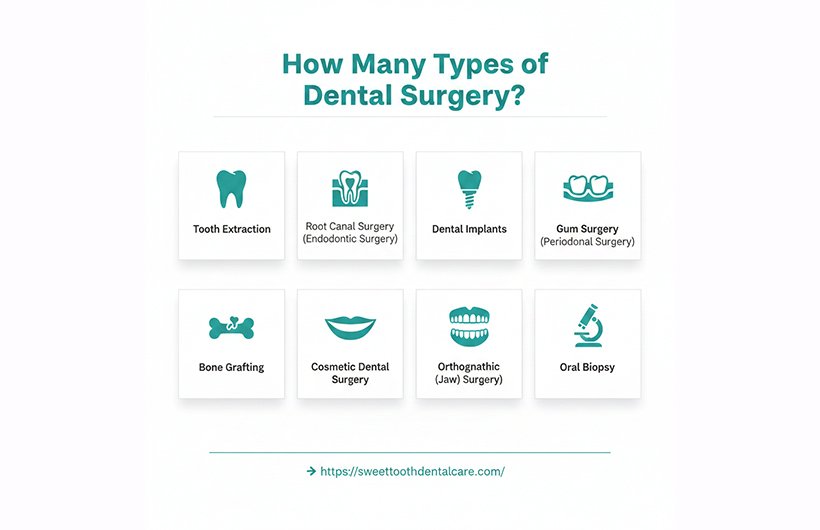
There are several oral surgery types that dentists perform depending on the condition of your teeth, gums, and jaw. Each surgery aims to either remove a problem, repair damage, or restore the natural function of your mouth.
Here are the most common dental surgery procedures:
1) Tooth Extraction
Tooth removal is the most widely performed dental surgery. A dentist may recommend an extraction if the tooth is:
- Severely decayed
- Infected
- Broken beyond repair
- Causing crowding
- Wisdom teeth stuck under the gums
Most extractions are quick and done with local anaesthesia to ensure the patient feels no pain. Impacted wisdom teeth may need minor surgical removal.
2) Root Canal Surgery (Endodontic Surgery)
A root canal treatment becomes necessary when decay reaches the inner pulp of the tooth, causing pain or infection. During this procedure, the dentist removes the infected tissue, cleans the canal, and seals it.
In rare cases, if the infection persists, a minor surgical procedure called apicoectomy may be done to remove the infection from the root tip.
3) Dental Implants
Dental implants are a modern and long-lasting solution for missing teeth. The process involves placing a titanium post in the jawbone, which supports an artificial tooth. Implants look natural, feel comfortable, and prevent bone loss.
This procedure is done under local anaesthesia and has a high success rate when performed by experienced dentists like Dr. Charmi Patanvadia.
4) Gum Surgery (Periodontal Surgery)
Gum surgeries are performed to treat gum infections, reshape gum tissue, or support loose teeth.
Common gum surgeries include:
- Flap surgery – deeply cleaning infected gum pockets
- Gum grafting – adding tissue to cover exposed roots
- Crown lengthening – reshaping gums to expose more tooth surface
These procedures help improve gum health and protect teeth from further damage.
5) Bone Grafting
When a person loses a tooth, the jawbone in that area may shrink over time. Bone grafting adds bone material to strengthen the jawbone so that implants can be placed safely. It is a routine and painless procedure performed under local anesthesia.
6) Cosmetic Dental Surgery
Cosmetic Dentistry procedures help improve the appearance of your smile through treatments such as:
- Gum contouring
- Crown lengthening
- Surgical placement of veneers or crowns (in cases where gum reshaping is required)
These Cosmetic Dentistry treatments enhance your smile and boost overall confidence.
7) Orthognathic (Jaw) Surgery
Jaw surgery is done when the upper and lower jaws do not align properly. This can cause chewing issues, jaw pain, or speech problems. Jaw surgery is more complex and usually performed in coordination with an orthodontist.
8) Oral Biopsy
If there is suspicious growth, lump, or patch inside the mouth, an oral biopsy is performed to test for infections, tumours, or other conditions. It is a simple and quick diagnostic procedure.
When Is Dental Surgery Needed?
Many patients wonder whether they really need surgery or if the issue can be treated with medicines or common dental procedures. Here are some signs that surgery may be required:
- Persistent tooth pain
- Repeated gum infections
- Loose teeth
- Missing teeth affects chewing
- Jaw pain or clicking
- Overcrowded or misaligned teeth
- Swelling, cysts, or lumps inside the mouth
A detailed examination and X-ray help your dentist understand the exact problem. At Sweet Tooth Dental Clinic, doctors ensure that surgery is recommended only when truly required and when it provides the best long-term results.
What Happens During a Dental Surgery Procedure?
Different surgeries follow different steps, but most dental surgeries include:
- Diagnosis
A complete oral check-up, X-rays, and discussion of symptoms help plan the correct treatment.
- Anaesthesia
Most surgeries use local anaesthesia, so the patient stays awake but feels no pain. For more complex procedures, sedation may be used for comfort.
- Surgical Procedure
The dentist performs the treatment carefully and ensures minimal discomfort. Modern tools make the entire process faster and more precise.
- Post-Surgery Care
Patients may receive:
- Pain-relief medicines
- Antibiotics (if needed)
- Instructions on diet and oral hygiene
- Follow-up appointments
With proper care, healing is smooth and quick.
How Should You Prepare for Dental Surgery?
Preparation helps reduce anxiety and ensures the procedure goes smoothly. Here are some simple steps:
- Share your medical history with the dentist
- Inform the doctor about any medications you take
- Avoid smoking and alcohol before surgery
- Eat a light meal if allowed
- Arrange for someone to accompany you if sedation is involved
The team at Sweet Tooth Dental Clinic explains every step clearly so you feel confident and relaxed before your procedure.
Is Dental Surgery Painful?
This is one of the most common worries among patients. Thanks to modern anaesthesia and gentle techniques, most dental surgeries are painless during the procedure. Some discomfort afterwards is normal and manageable with medication and proper care.
The goal of dental surgery is to relieve pain, not create it.
Final Thoughts
Dental surgery is a safe, reliable way to restore your oral health and prevent long-term complications. With modern techniques and experienced specialists, you can Maintain Your Dental Treatment with confidence and comfort. At Sweet Tooth Dental Clinic, patients receive gentle care and guidance to ensure every procedure feels smooth and stress-free.
Whether you need an extraction, implants, gum surgery, or any advanced procedure, consulting a trusted Dentist in Ahmedabad helps you make informed decisions about your oral health. Regular dental visits also play a crucial role in preventing issues before they become serious.
If you notice pain, swelling, or any discomfort, don’t delay. Seeking early treatment protects your smile and supports long-term dental wellness.