

The word “root canal” makes most people wince before the dentist has even picked up an instrument. It’s one of the most feared phrases in dentistry, right up there with “you need an extraction.”
Here’s the part that surprises most patients: a root canal doesn’t cause that pain — it’s almost always there to end it. The infection or inflammation inside your tooth is what hurts. The procedure exists to remove that source of pain, not add to it. At Sweet Tooth Dental Care, a dental clinic in Naranpura, Ahmedabad, this is one of the most common fears we help patients work through.
This guide walks through what actually happens during root canal treatment, why the fear doesn’t match the reality, and how to know if you genuinely need one.
Why Root Canals Have Such a Bad Reputation
The fear around root canals is mostly a holdover from decades ago, when anesthesia and instruments weren’t as advanced as they are today. Older patients, or people who’ve heard secondhand stories, often picture a procedure that no longer reflects modern dentistry.
Today’s root canal treatment uses precise local anesthesia, rotary instruments that work faster and more comfortably, and techniques designed specifically to minimize discomfort. Most patients report feeling pressure during the procedure, not pain — and many say the experience was easier than they expected from a routine filling.
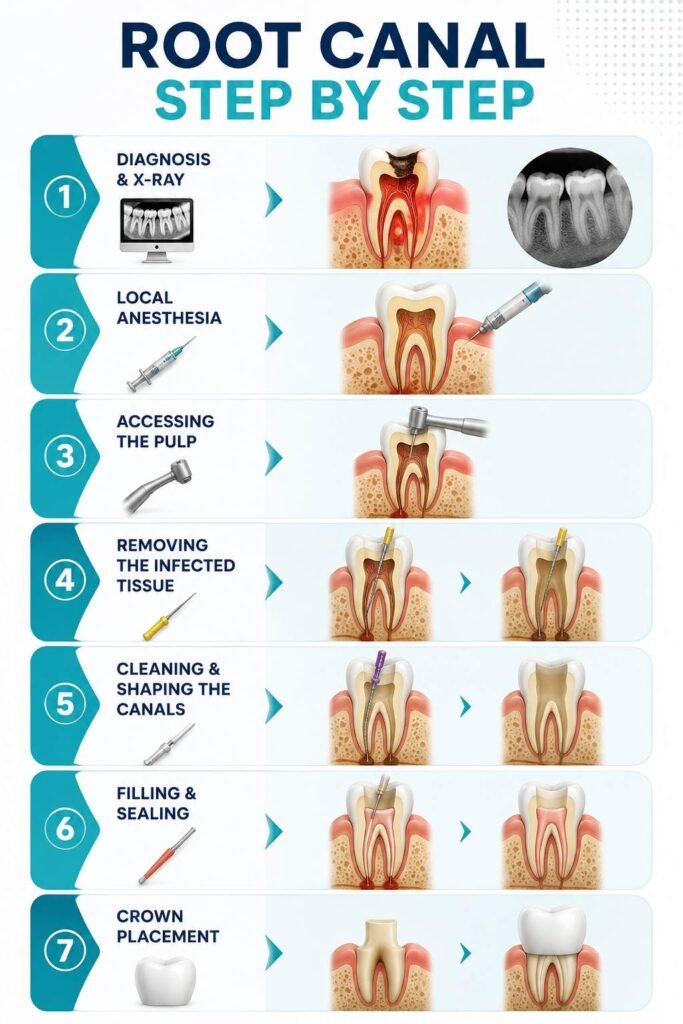
What Actually Happens During a Root Canal?
Understanding the steps tends to ease most of the anxiety, since the unknown is usually scarier than the procedure itself.
- Diagnosis and X-ray. Your dentist takes an X-ray to see how deep the infection or decay has reached and confirms a root canal is the right treatment.
- Local anesthesia. The tooth and surrounding gum tissue are fully numbed before anything else begins. You shouldn’t feel sharp pain at any point after this.
- Accessing the pulp. A small opening is made in the top of the tooth to reach the infected or inflamed pulp inside.
- Removing the infected tissue. The damaged pulp, which contains the nerves causing your pain, is carefully removed.
- Cleaning and shaping the canals. The inside of the tooth is disinfected and shaped to prepare it for filling.
- Filling and sealing. The cleaned canal is filled with a biocompatible material to prevent reinfection.
- Crown placement. In most cases, a crown is placed afterward to protect the tooth, since it can become more brittle once the nerve is removed.
A single-sitting root canal typically takes one to two hours, depending on the tooth and how complex the infection is. Some cases, especially molars with curved or multiple canals, may need a second visit.
Does It Hurt During the Procedure?
With proper anesthesia, you shouldn’t feel pain during the treatment itself. What patients commonly describe instead is pressure or vibration from the instruments, which is a sensation, not pain.
It’s worth being honest here: every mouth and every infection is different. In rare cases of severe, longstanding infection, numbing can take a little longer to fully take effect, and your dentist may need to adjust the anesthesia. If you ever feel sharp pain during treatment, tell your dentist immediately — there are ways to address it right away.
What About After the Procedure?
This is the part competitors often gloss over, so let’s be direct about it. Mild soreness for a day or two after treatment is normal and expected. Your gums and the tissue around the tooth have been worked on, and some tenderness while that heals is part of the process, not a sign something went wrong.
Most patients manage this with over-the-counter pain relief and find it fades within 48 hours. If you notice swelling, a fever, or pain that worsens instead of improving after a few days, that’s a reason to contact your dentist promptly — it could indicate the infection wasn’t fully resolved.
Do You Actually Need a Root Canal? Signs to Watch For
Not every toothache means you need a root canal, and not every root canal candidate is in obvious pain. Here’s a simple way to think about it:
You may need a root canal if you have:
- Sharp pain when biting or chewing that doesn’t settle
- Lingering sensitivity to hot or cold that continues well after the stimulus is removed
- A tooth that’s noticeably darker or discoloured compared to the others
- Swelling or tenderness in the gums near a specific tooth
- A small, recurring pimple-like bump on the gum (a sign of infection)
You may not need one if:
- Sensitivity is brief and only happens with very hot or cold foods, then disappears quickly
- There’s no swelling, discoloration, or persistent pain
- The discomfort started recently after a filling or cleaning and is settling on its own
If you’re unsure which list you fall into, that uncertainty itself is a good reason to get it checked. Some infections don’t cause noticeable pain at all in the early stages, which is exactly why delaying an exam can let a small problem turn into a bigger one.
What Happens If You Delay Treatment?
Putting off a root canal when one is genuinely needed doesn’t make the problem go away — it usually makes it worse. The infection can spread to surrounding tissue and bone, increase the risk of losing the tooth entirely, and in some cases lead to a more painful emergency visit later.
A root canal, by comparison, is a relatively conservative procedure. It saves your natural tooth instead of removing it, which keeps your bite, jawbone, and surrounding teeth in better long-term shape than an extraction would.
How to Manage Root Canal Anxiety
If fear is what’s actually holding you back rather than the procedure itself, a few things help:
- Ask your dentist to walk you through each step before starting, so nothing feels unexpected
- Mention any past bad experiences — your dentist can adjust their approach accordingly
- Bring headphones or something to distract you during the appointment, if that helps you relax
- Remember that the goal of the visit is to stop the pain you already have, not create new pain
Dental anxiety is common, and a good dental team will take it seriously rather than rush you through.
Don’t Let Fear Decide for You
The fear around root canals is almost always bigger than the procedure itself. Modern anesthesia and technique mean the treatment is designed to relieve pain, not cause it — and waiting out of fear usually leads to more discomfort, not less.
If you’ve been putting off a persistent toothache because of what you’ve heard about root canals, it’s worth getting an honest opinion first. Dr. Charmi Patanvadiya at Sweet Tooth Dental Care in Naranpura can assess whether you actually need one and walk you through exactly what to expect — book a consultation or chat with us on WhatsApp to get started.
Book your appointment today or chat with us on WhatsApp.
Your Smile Deserves Expert Care
If you’re experiencing severe tooth pain, swelling, bleeding gums, or a broken tooth, timely treatment can help prevent complications. Contact Sweet Tooth Dental Clinic for prompt dental care
Frequently Asked Questions
Q: How many visits does a root canal usually take?
A: Many root canals can be completed in a single sitting. More complex cases, particularly molars with curved canals or longstanding infection, may need two visits.
Q: Will I need a crown after a root canal?
A: In most cases, yes. Once the nerve is removed, the tooth can become more brittle, and a crown helps protect it from cracking under everyday chewing pressure.
Q: Is the pain after a root canal worse than the pain before it?
A: For most patients, no. Post-treatment soreness is typically mild and temporary, while the pain that led to needing the root canal is usually what was disrupting daily life.
Q: Can a root canal fail?
A: It’s uncommon, but possible, particularly if a canal was missed or reinfection occurs later. If pain returns to a previously treated tooth, retreatment is usually still possible.
Q: How long does a root canal-treated tooth last?
A: With a properly placed crown and good oral hygiene, a root canal-treated tooth can last for many years, often a lifetime.
This article is for informational purposes only and does not constitute dental or medical advice. Please consult Dr. Charmi Patanvadiya or a qualified dental professional for personalised guidance.