

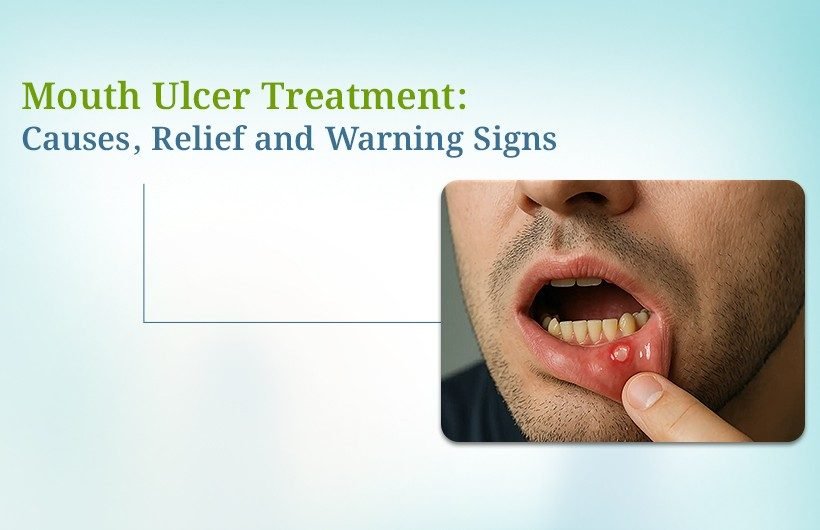
That small, painful sore on the inside of your cheek or under your tongue can turn every meal into a chore. Most patients looking for mouth ulcer treatment want two things fast: relief from the pain and reassurance that it isn’t something serious. For the right mouth ulcer treatment, understanding what’s causing the sore matters as much as how you treat it. As the Best Dental Clinic in Naranpura Ahmedabad, we see patients with recurring mouth ulcers regularly, and most of them heal on their own within one to two weeks with the right approach.
What Is a Mouth Ulcer?
A mouth ulcer, also called a canker sore or aphthous ulcer, is a small, shallow sore that forms on the soft tissue inside the mouth. It usually appears on the inner cheeks, the underside of the tongue, the inside of the lips, or the floor of the mouth. Most are round or oval, with a white or yellowish canter and a red, inflamed border.
It’s worth telling mouth ulcers apart from cold sores. A cold sore forms on the outside of the lips, is caused by a virus, and can spread through contact. A mouth ulcer forms inside the mouth, is not contagious, and is not caused by a virus in the same way.
What Causes Mouth Ulcers?
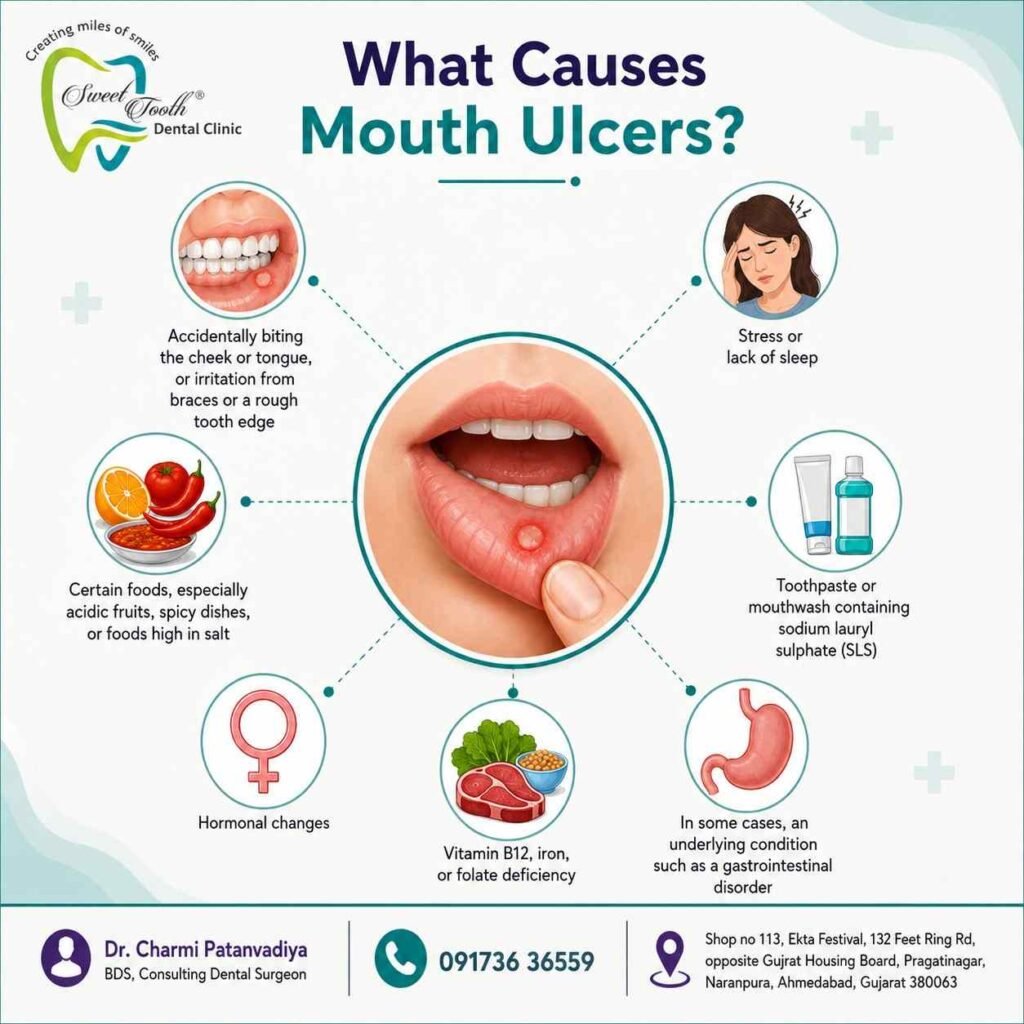
There isn’t one single cause. In most patients, it’s a combination of triggers:
- Accidentally biting the cheek or tongue, or irritation from braces or a rough tooth edge
- Stress or lack of sleep
- Certain foods, especially acidic fruits, spicy dishes, or foods high in salt
- Toothpaste or mouthwash containing sodium lauryl sulphate (SLS)
- Hormonal changes
- Vitamin B12, iron, or folate deficiency
- In some cases, an underlying condition such as a gastrointestinal disorder
Because so many everyday habits can trigger a mouth ulcer, one-off sores are rarely a cause for concern. Frequent ulcers, however, are worth paying attention to.
Mouth Ulcer Treatment You Can Try at Home
Most simple ulcers heal on their own in 7 to 14 days. While it heals, these steps can reduce the pain:
- Rinse gently with warm salt water two to three times a day
- Avoid spicy, acidic, or very hot food and drinks while the sore is active
- Use an over-the-counter gel made specifically for mouth ulcers
- Avoid picking at the sore or touching it repeatedly with your tongue
- Switch to a toothpaste without SLS if ulcers keep coming back
Pain from a mouth ulcer usually peaks in the first two to three days, then eases gradually as the sore closes. If the pain isn’t easing after the first week, it’s a sign to check in with a dentist rather than wait it out further.
When to See a Dentist for a Mouth Ulcer
Not every mouth ulcer needs a dental visit, but certain patterns do. Book a checkup if you notice:
- A sore that hasn’t healed after 2 to 3 weeks
- Ulcers that are unusually large or that keep appearing one after another
- New sores forming before old ones have healed
- A sore accompanied by fever, swollen lymph nodes, or bleeding
- A painless sore, since these can sometimes need closer evaluation
At a checkup, Dr. Charmi Patanvadiya examines the sore, asks about diet, stress levels, and any other symptoms, and rules out causes like a rough tooth edge or vitamin deficiency before recommending mouth ulcer treatment tailored to the cause. Read more about what we look at during a related discomfort check in our post on is dental filling painful.
Can You Prevent Mouth Ulcers?
You can’t prevent every mouth ulcer, since triggers like stress or hormonal shifts aren’t fully in your control. But a few habits lower how often they show up:
- Brush with a soft-bristle brush to avoid nicking the inside of your cheek
- Get regular checkups so sharp tooth edges or ill-fitting braces get fixed early
- Manage vitamin B12 and iron intake if you’re prone to recurring ulcers
- Reduce acidic and heavily spiced foods if you notice they trigger a flare-up
If sensitivity or discomfort is a recurring theme for you beyond ulcers, our guide on tooth sensitivity causes covers a related set of triggers worth ruling out.
Not Sure If It’s Just an Ulcer?
If a sore in your mouth doesn’t fit the usual pattern, don’t wait it out at home guessing. Contact us and we’ll take a proper look before it becomes a bigger problem.
Conclusion
A single mouth ulcer is rarely anything to worry about, and most cases resolve with basic mouth ulcer treatment like saltwater rinses and avoiding trigger foods. What matters is watching for the exceptions: a sore that won’t heal, one that’s unusually large, or ulcers that keep returning. Dr. Charmi Patanvadiya and the team at Sweet Tooth Dental Care in Naranpura see this regularly and can tell you quickly whether it’s routine or needs closer attention. If your sore has crossed the two-week mark, chat with us on WhatsApp and book a checkup.
Book Your Consultation with Dr. Charmi Patanvadiya Today.!
Meet Dr. Charmi Patanvadiya at Sweet Tooth Dental Care, a trusted dental clinic in Ahmedabad. An experienced female dentist in Ahmedabad providing personalized, modern dental care for confident smiles.
Frequently Asked Questions
Q: Are mouth ulcers contagious?
A: No. Mouth ulcers (canker sores) are not caused by a virus and cannot spread to another person through contact.
Q: How long does a mouth ulcer usually take to heal?
A: Most heal within 7 to 14 days without any treatment. If it’s still there after 3 weeks, get it checked.
Q: Is a mouth ulcer treatment cream necessary, or will it heal on its own?
A: Simple ulcers usually heal on their own. A gel or cream just reduces pain while that happens, it doesn’t speed healing significantly.
Q: Can vitamin deficiency really cause mouth ulcers?
A: Yes. Low vitamin B12, iron, or folate is a common cause of recurring ulcers, and correcting the deficiency often reduces how often they appear.
Q: My child keeps getting mouth ulcers. Should I be worried?
A: Occasional ulcers in children are common and usually harmless. Frequent, large, or unusually painful ones are worth a dental check to rule out other causes.
This article is for informational purposes only and does not constitute dental or medical advice. Please consult Dr. Charmi Patanvadiya or a qualified dental professional for personalised guidance.